Purgatorio
The course of purification: a path of soul
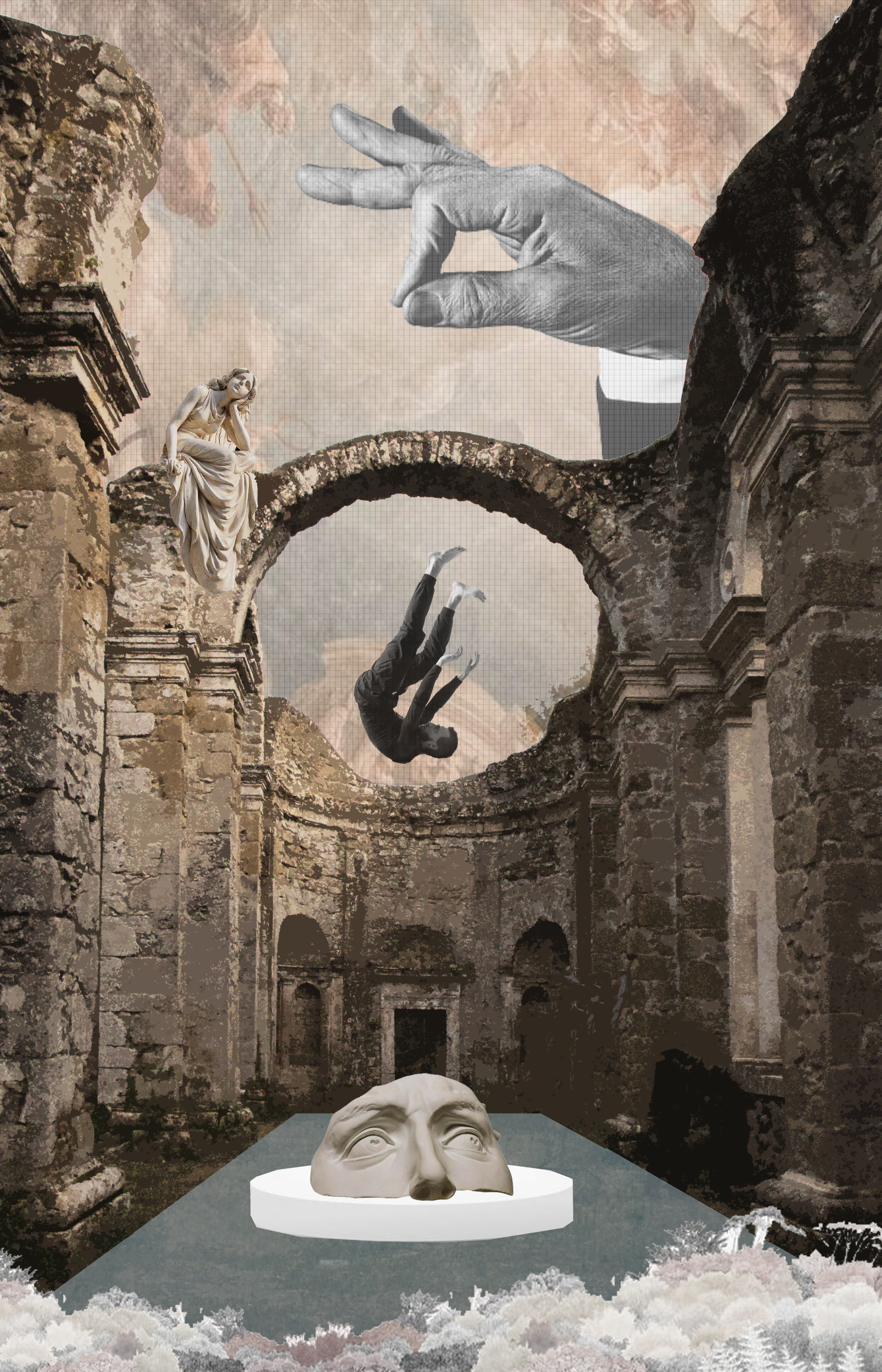
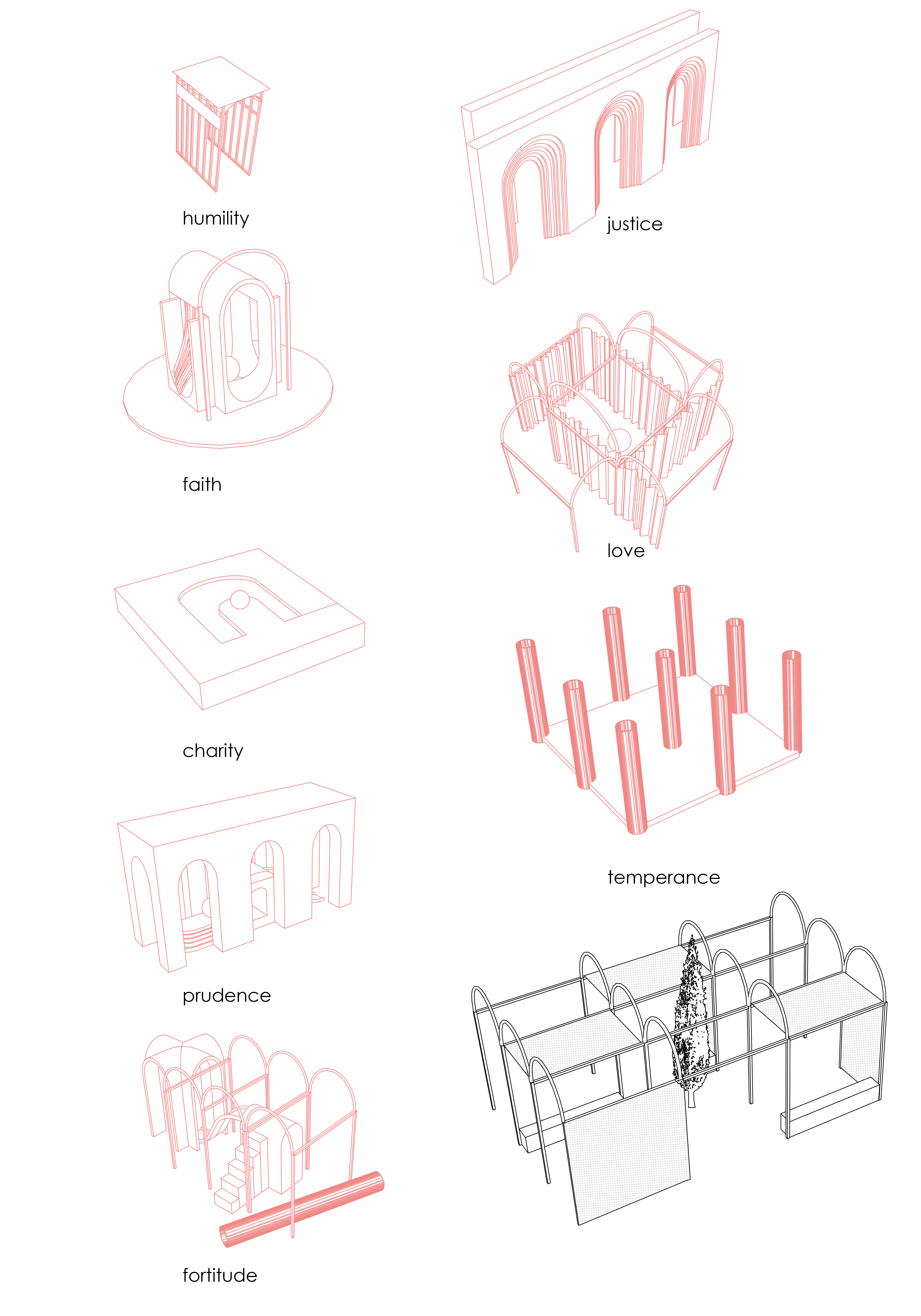
What does a Nymphaeum have in common with a contemporary theater? The purgation. Aristotle describes purification as the final stage of Greek tragedy, as a spiritual completion, a mental cleansing of the spectator. The concept of “Purgatorio” is spatially conveyed through the Divine Comedy of Dante. In purgatory, the nine stages on the road to heaven are described: humility, love, temperance, fortitude, justice, prudence, faith, hope, and charity. Therefore, having the logic of purification as a concept design, a themed route is created in the park.
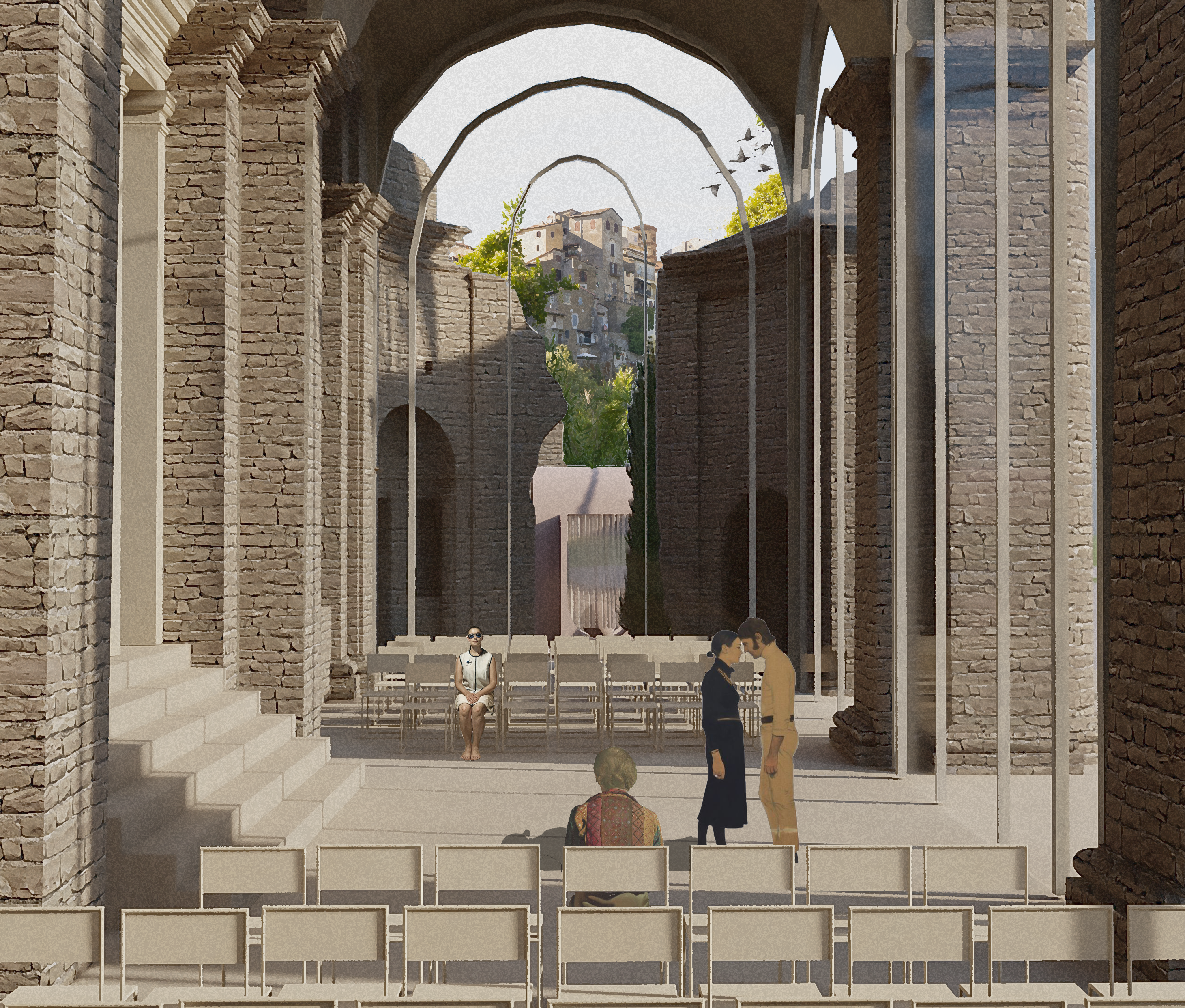
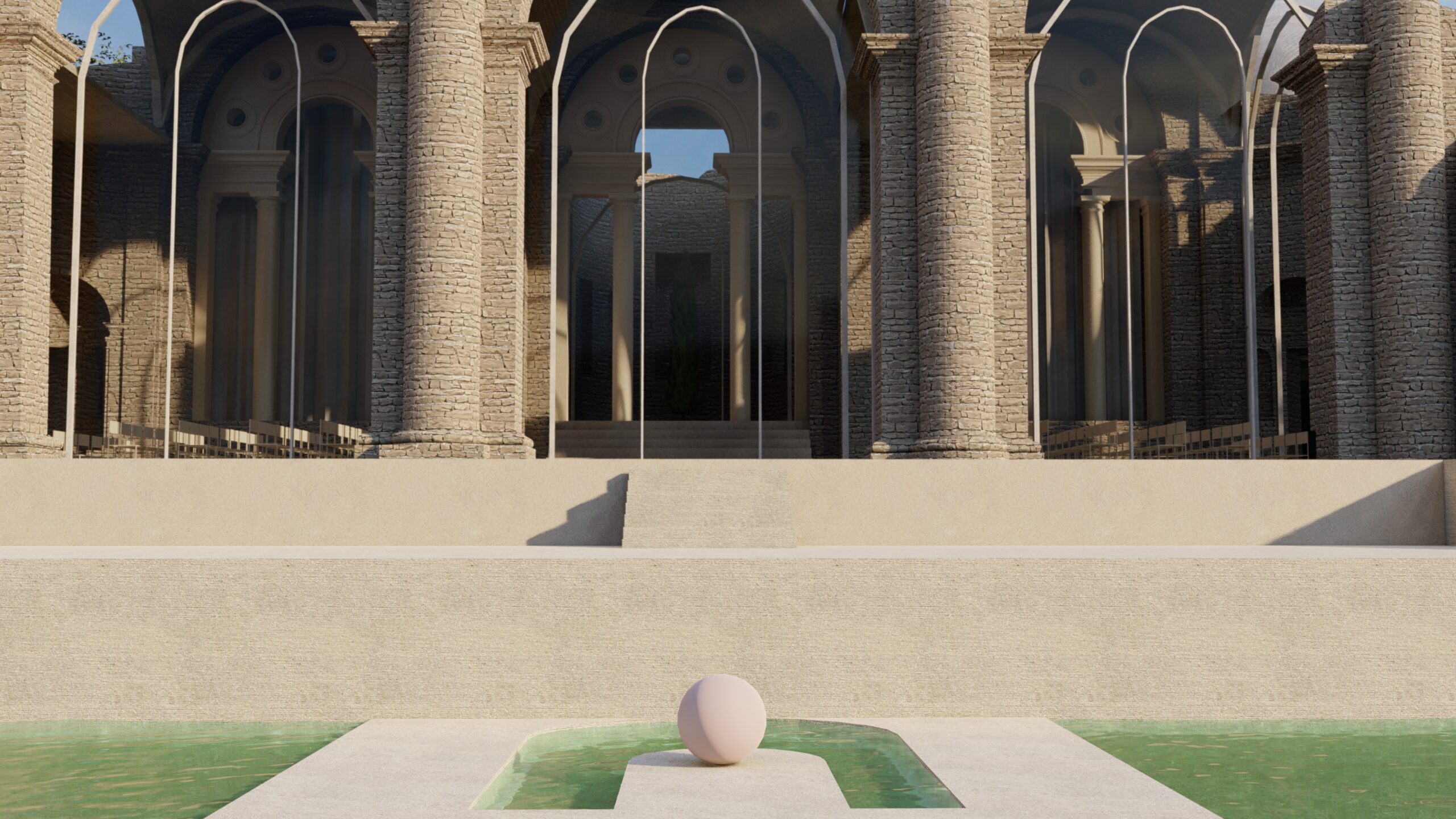
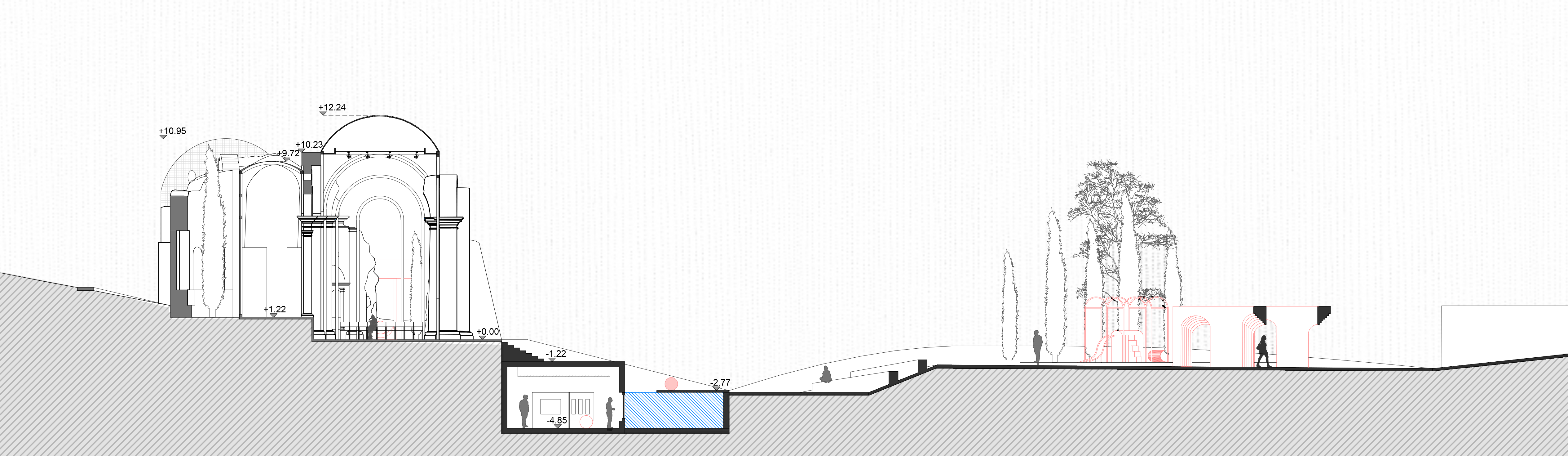
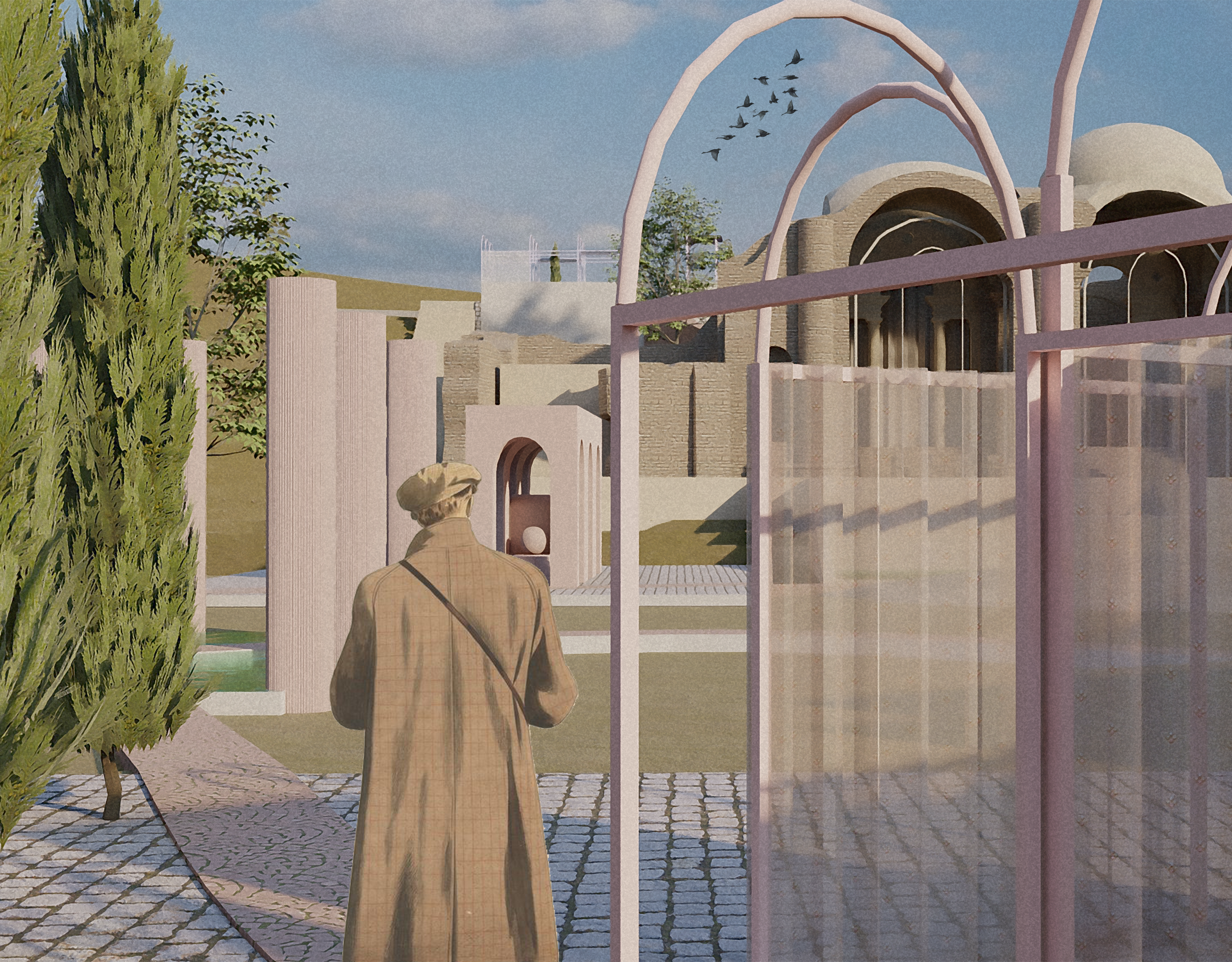
The elements of the path stops are reinterpretations of the existing structural elements of Nymphaeum. The space of the octagon, where the element of water is located, is the final stage of the thematic route. The water plays a binding role in its design, as it is located at various points. The visitor is invited to a spiritual journey that leads him to purification, just as a theatrical performance would according to Aristotle. The entrance to the theater is made from the existing staircase, where an observation area and an info point are created at the top so that the complex is easily recognizable from the street level. The three distinguishing arches function as part of the scenery in the inner and outer theater, which extends beyond. The spectators are divided to the right and left of the stage. The boundary between the building and the scenery is eliminated. The external theater is created to cover multiple cultural events with various artistic characteristics.
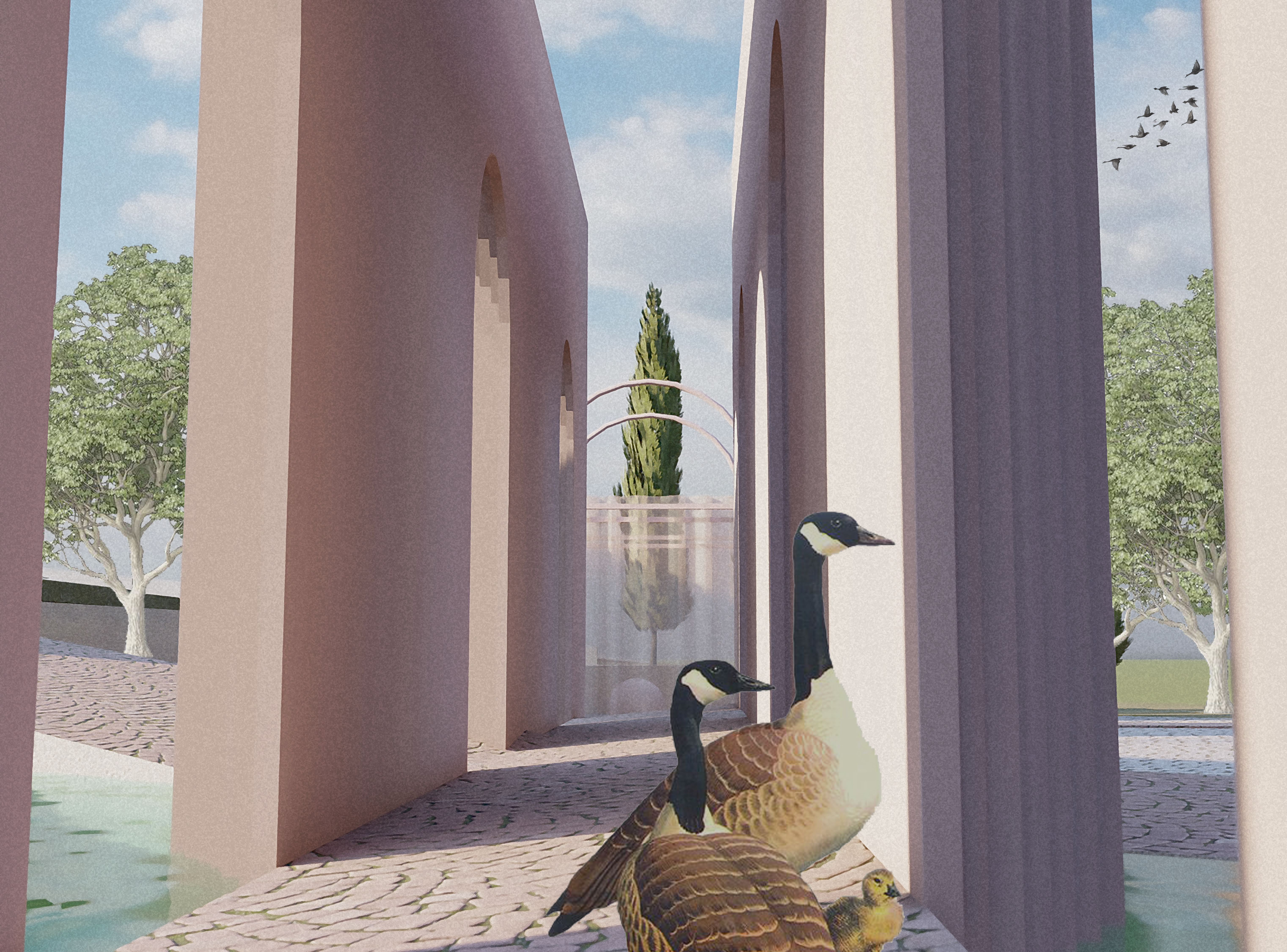
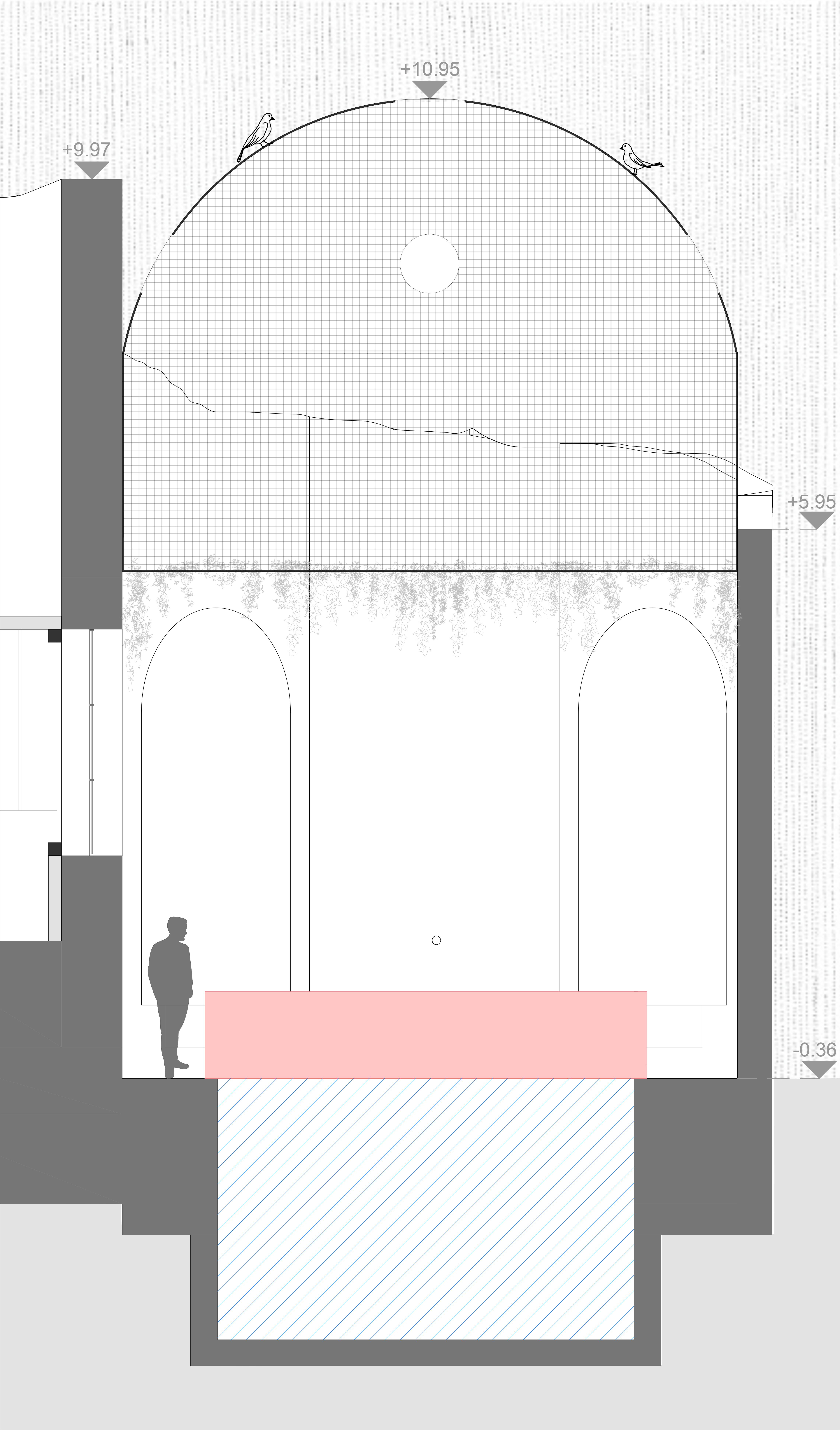
Beneath the outer stage is an exhibition hall, that unfolds the concept of cleansing through the ages, through art, and walking alongside the water as part of the sensory narrative. The entrance to the park can also be constructed on the opposite side, where an info point is also situated and the descent into the park begins. The design aims to leave parts of the building as ruins and not refine all its spaces. For this reason, a metal mesh in the form of a dome is placed in the area of the octagon, trying to render perhaps the previous image of it, as a trace of history. That dome and the one above the stage follow Bramante’s technique of double domes, to meet the needs of their new uses. At the same time, the mesh dome together with the water and the rest of the park, create a shelter for the local fauna.